
12/11/2025
GPT 5 and AI GPT Models: Features, Benefits, and Business Use Cases
Explore the key features, benefits, and business applications of GPT 5 and other AI GPT models. Learn how these advanced language models enhance content creation, coding automation, chatbots, and more for startups and enterprises.
NightCoders

What is GPT 5 and its Key Features?
Entrepreneurs and product builders are increasingly exploring AI-driven solutions that can fast-track innovation, especially as advanced models like GPT 5 emerge. GPT 5 stands as the latest significant advancement in natural language processing, designed to understand and generate human language with higher accuracy and nuance than prior iterations. Its architecture further expands the token context window, enabling it to process longer documents and manage more complex dialogue threads without losing coherence. Among its pivotal features are improved reasoning capabilities, richer contextual awareness, enhanced multimodal processing, and a more robust ability to follow detailed instructions.
For founders considering integration of cutting-edge AI, knowing that GPT 5 offers improved multilingual support and a deeper understanding of subtle user intent can be crucial for product differentiation. The model is built to recognize patterns in large data sets more efficiently, resulting in more relevant content generation and smoother interactions within applications. Its capacity for dynamic learning allows it to adapt responses based on feedback, supporting the creation of personalized user experiences. With security and bias reduction measures further refined, GPT 5 presents businesses with opportunities to innovate confidently and responsibly.
How Does GPT Work in Artificial Intelligence?
Many wonder how GPT models actually operate within the realm of artificial intelligence. At their core, Generative Pretrained Transformers (GPTs) are deep learning neural networks trained on vast text datasets to predict and generate human-like language. GPT models like GPT 5 leverage transformer architectures that utilize attention mechanisms, allowing the model to weigh the importance of different words in a sequence. This enables rich contextual understanding and the generation of coherent, fluent text in conversations, documents, and various content types.
When users input prompts, GPT dynamically generates outputs by predicting the most probable next word, drawing from billions of learned parameters. This predictive strength allows GPT to simulate engaging dialogues, craft content in different tones, and even assist with tasks such as code generation or summarization. AI projects that rely on GPT benefit from its adaptability to diverse domains, while continuous fine-tuning ensures relevant and up-to-date knowledge for customers. The model's versatility makes it a foundation for everything from chatbots and virtual assistants to advanced analytical tools used by entrepreneurs working with NightCoders - Launch your MVP in weeks.
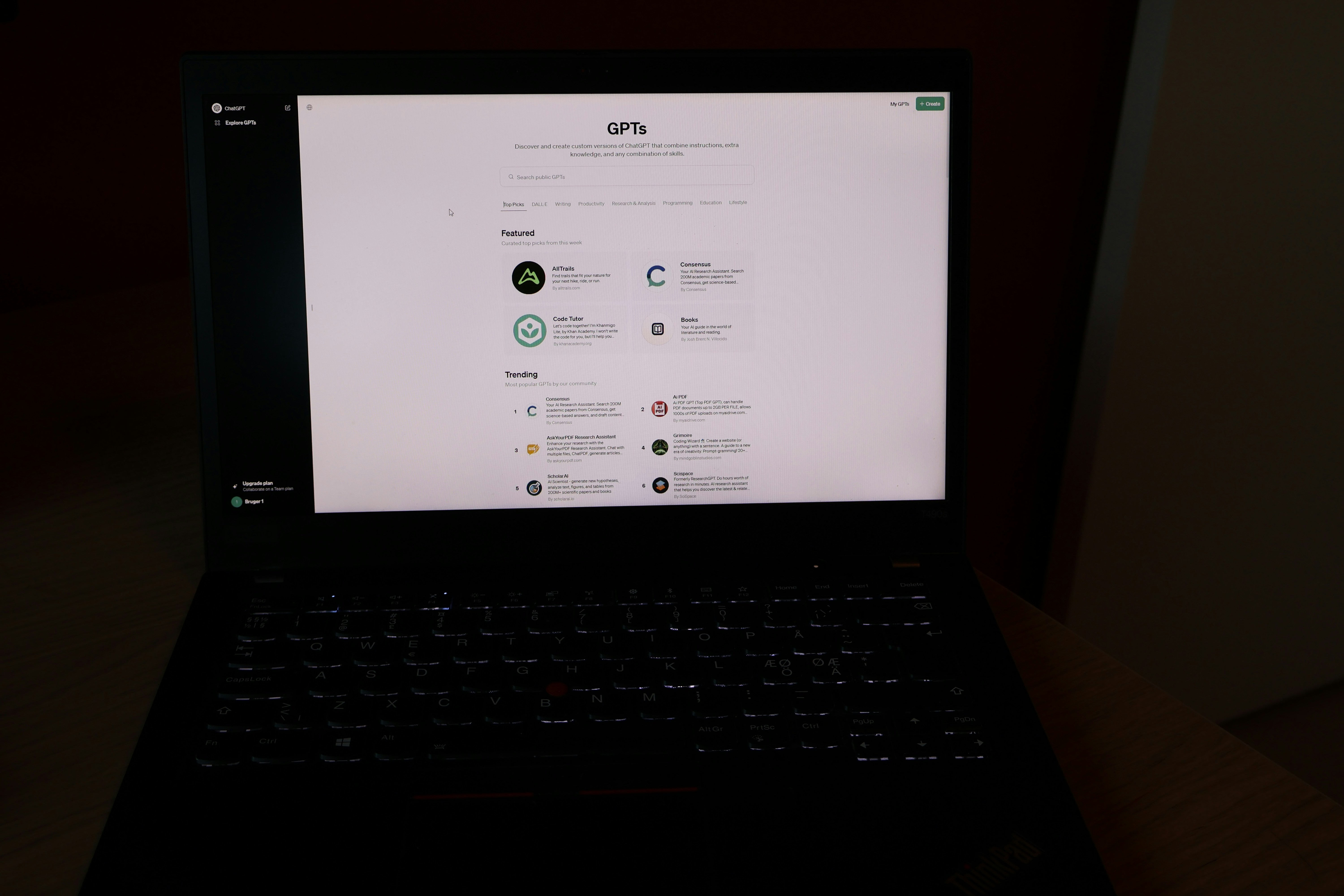
Difference Between GPT 4 and GPT 5
Understanding the evolution from GPT 4 to GPT 5 can help tech-savvy founders assess the impact on their products and workflows. GPT 4 laid the groundwork with strong language understanding, multimodal capabilities, and more substantial context handling compared to GPT 3.5. GPT 5, however, takes these advancements even further by significantly expanding the token context window, enabling a single conversation to span much greater lengths without fragmenting the logic or continuity.
GPT 5’s improvements also include upgraded reasoning and problem-solving faculties, allowing the model to engage in more complex analysis. The model’s training corpus is broader, offering higher fluency in additional languages and specialized domains. Another marked enhancement lies in mitigation of hallucinations, reducing the rate of inaccurate or misleading responses, a key area of concern in previous models. For startups looking to outperform competitors, these technical leaps mean faster iteration, better customer experiences, and safer deployments.
Best AI GPT Models in Recent Years
Business leaders often seek the most effective AI GPT models to deliver tangible value. Aside from GPT 5, several versions have gained prominence for their performance and capabilities. GPT 3.5 excels at rapid prototyping due to its ease of integration and generally strong language abilities. GPT 4 introduced robust multimodal functions, such as interpreting both text and images, making it ideal for more interactive applications.
Meanwhile, open-source alternatives like Llama and Claude have attracted innovators seeking customization and transparency. These options provide greater control over model training and adaptation for unique industry requirements. Teams working with partners like NightCoders can evaluate which model fits best into their product roadmap, with factors like speed, customization, multilingualism, and data privacy guiding the decision. Staying aware of recent releases ensures developers use the most appropriate model for a given app or business case.
Top GPT AI Tools for Businesses
There is growing demand within the startup and enterprise communities for productivity-boosting AI tools powered by advanced GPT models. Chatbots and virtual assistants, for example, leverage GPT to automate customer support, streamline sales processes, and improve user engagement. Content generation platforms use GPT to produce high-quality articles, product descriptions, and marketing copy at scale, significantly reducing workloads for content teams.
Customer service applications benefit from real-time language understanding, offering empathetic and context-aware responses that enhance brand reputation. Coding assistants integrate with software development environments to produce functional code snippets, documentation, or even debug errors, accelerating the launch of minimum viable products. Businesses can further explore GPT-powered business intelligence platforms that automate research, generate insights, and personalize recommendations, driving smarter decision-making across teams.

GPT 5 Capabilities and AI Advancements
Recent advancements in AI have brought forth a new era of generative language models, positioning GPT 5 at the forefront. This iteration showcases enhanced comprehension, memory retention, and the ability to follow multifaceted instructions across extended conversations. GPT 5’s multimodal skills allow it to process not only text but also images and other data types, widening its applicability from traditional dialogue agents to creative design and analysis tasks.
The next-generation AI models are also designed to learn from user interactions in real time, refining their outputs based on evolving contexts. Ethical guardrails and improved filtering reduce undesirable content generation, providing organizations with safer tools for public-facing solutions. As a result, startups now have access to intelligent systems that can brainstorm, draft, code, and analyze at unprecedented scale and speed, giving businesses a strategic edge.
How to Use GPT for AI Projects
In practical terms, leveraging GPT for AI projects involves a clear approach to identifying business needs and opportunities. The first step is selecting the appropriate model size and capabilities, considering the complexity and required output. Integration methods include using APIs, software development kits, or custom deployments, each with trade-offs in cost and control.
For an AI-powered MVP, founders collaborate with AI experts and teams, such as those at NightCoders, to design workflows that maximize model strengths. Fine-tuning or prompt engineering is often required to tailor outputs for specific user segments or industry requirements. Regular evaluation of model outputs, coupled with feedback loops, ensures continued improvement and adaptation as business objectives evolve. An agile, feedback-driven approach helps teams iterate quickly and move from concept to launch in just weeks.
How GPT Enhances Machine Learning Tasks
GPT models are transformative for machine learning pipelines due to their ability to process unstructured data and generate meaningful insights. By embedding GPT in data annotation, summarization, or data cleaning, organizations reduce manual labor and improve data quality for subsequent training tasks. GPT can automate feature extraction, translating raw data into structured formats that feed into predictive analytics or classification systems.
In more advanced scenarios, GPT models facilitate transfer learning, allowing developers to adapt pre-trained knowledge to specific domains with reduced resource investment. They serve as the backbone for intelligent querying, search, and entity recognition, augmenting traditional rule-based methods. As a bridge between data engineering and user application, GPT’s language processing infuses intelligence across all product and research layers.
Advantages of Using GPT for Content Creation
Content creators and businesses stand to gain significantly from adopting GPT in their workflows. The primary advantage is the ability to generate large volumes of high-quality text in a fraction of the time it would take manually. GPT can adapt its tone and style to match brand guidelines, ensuring consistency across websites, social media, and marketing campaigns.
Its capacity to repurpose or summarize existing materials allows teams to maximize the reach and utility of their content assets. With capabilities such as multilingual output, businesses can expand global reach effortlessly, engaging audiences in their native languages. The built-in knowledge base and creativity of advanced GPT models help spark new ideas, draft scripts or storyboards, and tailor proposals for different stakeholders, making it a vital tool for dynamic, content-driven startups.
How to Integrate GPT in Chatbots
Integrating GPT into chatbots has become a proven strategy for businesses seeking advanced conversational capabilities. The process usually starts with selecting a compatible GPT model, then using available APIs or libraries to embed the model into chatbot frameworks. The integration requires careful design of conversation flows, ensuring the bot can handle a variety of queries, escalate complex issues, and provide relevant information consistently.
Best practices include feeding the bot with context-relevant training data and setting parameters that align outputs with company policies or tone standards. Ongoing monitoring and user testing facilitate refinement of chatbot performance, helping to reduce misunderstandings and improve satisfaction. By automating routine inquiries and personalizing interactions, GPT-powered chatbots free up human teams to focus on high-value, complex challenges, enhancing operational efficiency.
Using GPT for Coding Automation
The software development industry has embraced GPT for automating and accelerating a wide range of coding tasks. GPT models can automatically generate boilerplate code, provide context-aware code suggestions, and even assist in writing unit or integration tests. By reading natural language requirements, GPT can translate user stories into functional code snippets, supporting rapid prototyping and iterative development.
Developers benefit from intelligent code review features, where GPT analyzes code for common issues or inefficiencies, providing actionable feedback. The model’s familiarity with diverse programming languages allows teams to move seamlessly across stacks, reducing onboarding time for new tech or frameworks. For startups aiming for quick MVP launches, as facilitated by teams at NightCoders - Launch your MVP in weeks (https://nightcoders.id), code automation with GPT is a force multiplier.
How to Train a GPT Model
Training a GPT model is a demanding process that typically requires specialized expertise and significant computing resources. The process begins with curating a diverse and representative dataset, covering the language and domain areas of interest. Text data is preprocessed, tokenized, and formatted for efficient consumption by the transformer architecture.
Training involves running the model through multiple passes of the dataset, adjusting parameters to minimize prediction errors. Fine-tuning is crucial for adapting the base model to specific tasks or industries, often leveraging smaller, domain-relevant datasets. Post-training validation checks for accuracy, bias, and safety, ensuring the model meets application standards. Deployment involves packaging the trained model for integration with end-user systems, sometimes exposing it via secure APIs for scalable access.
Limitations of GPT Technology
Despite notable progress, GPT models have inherent limitations that founders should consider. One major challenge is the risk of generating inaccurate or nonsensical responses, especially when queries fall outside the model’s training scope. These hallucinations can impact critical decision-making if outputs are not carefully validated.
Data privacy is another concern, as some GPT deployments process sensitive information. Rigorous data security and compliance assessments are necessary before processing proprietary or user data. GPT also can struggle with long-term memory, sometimes losing track of detailed instructions over lengthy interactions. Ethical considerations, such as bias and responsible use, require continuous oversight as business and regulatory landscapes shift.
Future of GPT and AI Development
The coming years promise even more sophisticated AI capabilities, building on transformer-based innovations like GPT 5. Ongoing research is pushing toward models with deeper contextual awareness, better real-time reasoning, and broader multimodal learning capacities. As models improve at learning from fewer labeled examples, a growing number of business and consumer applications will emerge, driving step-change improvements in productivity and personalization.
AI teams are also prioritizing transparency, auditability, and explainability, giving organizations more control over how models are deployed and monitored. New frameworks aim to make AI safer, fairer, and more adaptable, enabling startups to incorporate advanced intelligence into products with greater assurance. As industry leaders like NightCoders continue to leverage these developments, MVP timelines will shrink, and founders will be empowered to innovate faster and more securely.
GPT AI Ethical Considerations
Ethics in AI development has moved to the forefront as GPT models become integrated into everyday tools and platforms. Key concerns include ensuring responsible usage, mitigating bias in model responses, and safeguarding user privacy. Developers are establishing frameworks that review and audit AI outputs, aiming for transparency and accountability in automated decision-making.
GPT 5 and its contemporaries now embed guardrails to automatically detect and limit harmful or misleading content. Businesses are encouraged to implement human-in-the-loop systems for tasks with significant consequences or sensitivities. As regulatory requirements continue to evolve, organizations must remain proactive, promoting fair access and minimizing societal risks associated with AI-driven automation.
Best Practices for GPT Language Models
To make the most of GPT and related language models, businesses deploy certain best practices. Regular prompt evaluation and refinement ensure outputs stay relevant to intended purposes. Introducing domain-specific context into prompts further enhances precision, particularly in specialized industries like finance, healthcare, or legal tech.
Another best practice involves incorporating user feedback loops, allowing AI models to adapt and improve over time. Security monitoring and compliance reviews support responsible usage, especially when processing customer or proprietary data. Finally, blending GPT solutions with legacy systems or complementary AI tools helps founders build robust, resilient technology stacks ready for rapid change and scaling.
FAQs
What is the typical release update cycle for GPT models and when is GPT 5 expected to be widely accessible?
Major GPT model updates typically follow an annual or biannual release cadence, with GPT 5 being gradually rolled out to select enterprise partners and cloud providers before broader availability.
How can businesses start integrating GPT 5 with their existing software tools?
Businesses can use cloud-based APIs, developer SDKs, or custom model deployments to integrate GPT 5, working closely with their technical teams or partners specializing in rapid product launches.
Can GPT models be fine-tuned for niche industry applications?
Yes, GPT models support domain-specific fine-tuning, allowing organizations to tailor language understanding and output for particular verticals or user segments.
What are common challenges when implementing GPT-powered chatbots?
Challenges include ensuring consistent and accurate responses, managing edge cases, and aligning the chatbot’s tone and content with brand standards.
How does using GPT improve coding automation for startups?
GPT streamlines software development by generating code snippets, reviewing for errors, and automating documentation, helping startups reduce time-to-market and scale projects efficiently.